Nonsense: A priori Detection of Hallucinations in LLMs
Work on hallucinations in large language models. No published versions are listed yet.
Student researcher · Software developer
Making machine learning more robust, accessible, and sustainable. Studying computer science at the University of Washington, Seattle — and building tools that bring research into the real world.
Machine learning · Responsible computing
Research
With great power comes great responsibility. My research explores how we can make machine learning more reliable, useful, and accountable to the people it serves.
Explore my research approach ↓Making ML models less susceptible to error and more applicable to the tasks at hand.
Ensuring people of different backgrounds, ages, and coding experiences can use ML tools to make their lives easier.
Using AI in ethical and sustainable ways to further social and conservation goals.
Comparing explanations for ML models and bringing explanatory systems together in a unified interface.
Studying why language models hallucinate and developing faster, more memory-efficient detection methods.
Accompanying research with libraries and software that apply findings to real-world problems.
In recent years, machine learning (ML) has become a hot topic because of its tremendous capabilities and numerous applications. However, with great power comes great responsibility. Because of this, I have focused my college research career on the following three areas:
I like to be hands-on in my research, and most of my research work is accompanied by libraries or software tools that apply my findings to the real world.
Specific lines of inquiry I have pursued / am currently pursuing include:
Of course, I am open to any new research area other than the ones above if it allows me to grow and aligns with my interest in responsible computing.
Publications
Work on hallucinations in large language models. No published versions are listed yet.
ICPRAI Conference Proceedings
Mitra,S and Gilpin, L. (2023). "A novel post-hoc explanation comparison metric and applications" ICPRAI Conference Proceedings, 2024. 1(3).
2 papers (4 total versioned papers). Comparing explanatory systems, quantifying their differences, and integrating the resulting metrics into machine learning pipelines.
UC Irvine - COSMOS Poster Session
1 poster. Used clonal evolution to model and analyze the effects of different cancer treatments on the probability of metastasis.
Projects & Skills
A library to parse, generate, and transcribe Indian classical music.
Explore projectAn AI assistant for any website, combining a React and Express app, a Python deployment interface, and retrieval augmented generation.
Explore projectAn iOS travel app using image classification and location tracking to identify geographic features and build itineraries.
Explore projectA web and Android app providing mental health guidance to teenagers and connecting them with trusted people and medical professionals.
Explore projectExperience

Amazon Web Services (AWS)
Built agent orchestration and A2UI integrations for AWS data-center teams; owned 36 packages and shipped 188 change requests.
valid8 AI
Co-founder and CEO of valid8 AI, an AI SAST and agentic cybersecurity company.
Amazon Web Services (AWS)
Built an agentic assistant for AWS datacenter work and serverless ML systems for schedule risk, with estimated multimillion-dollar mitigation impact.
Teaching
From K–12 math and computer science to teaching across five college disciplines.
Full teaching history →Mission College
Teaching assistant for 12 courses spanning computer science, biology, chemistry, physics, and mathematics.
Light and Salt Academy
K–12 math and computer science tutoring for children from refugee families.
Leadership
Representing around 1,000 students in the University of Washington’s student government.
Explore roleLeading a team of 5–6 researchers studying large language model robustness at UC Santa Cruz’s AIEA Lab.
Explore roleFounded Computing for Environmental and Social Advocacy, an Allen School organization applying computing to social and environmental issues.
Explore roleTalks
Loews Bay Coronado Resort
An award-winning C-SPAN StudentCam documentary on domestic approaches to plastic pollution.
University of Washington, Seattle
A guest lecture on CESA and the role of computing in environmental and social advocacy.
University of North Carolina, Charlotte
A three-point foreign policy proposal and a foundation for international action on plastic pollution.
About
Student researcher · Computer science
University of Washington, Seattle
I am a student researcher and software developer focused on making machine learning more robust, accessible, and sustainable. Based in Santa Clara, CA.
Completed or in progress
BS, Computer Science (minor Entrepreneurship)
AS, Computer Information Systems
AA, Natural Science and Math
Machine Learning Specialization
High School Diploma
Visharad, Indian Classical Music
Bengali · French · English
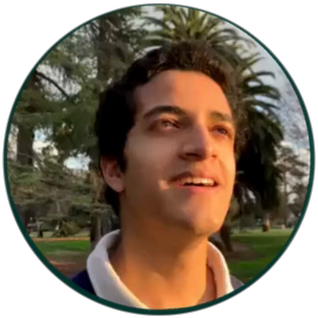
Hello!  I’m Shreyan Mitra, a student in the Paul G. Allen School of Computer Science at the University of Washington, Seattle.
In addition to my research, I am also the President and Co-founder of Computing for Environmental and Social Advocacy (CESA), a 30+ member team affiliated with the University of Washington Allen School that focuses on applied topics such as an AI-driven solution to the climate crisis and a software tool to check for potential ethical violations/accessibility concerns in code. Currently, we’re working on modeling pollution in disadvantaged communities of the Puget Sound area.
In my free time, I enjoy playing cricket. I am the President of the Husky Cricket Club at the University of Washington, and always open for a late afternoon game.
This is my professional portfolio. Here, you’ll find examples of my research, publications, and teaching experience. However, wherever possible, I have included links to external sites if you want to learn more about me as a person.
Contact
I am open to new research areas that allow me to grow and align with my interest in responsible computing.
shreyan.m.mitra@gmail.com ↗